


Beta Technologies completes first flights of U.S. air-taxi pilot program delivering organ
Amazon-backed aerospace startup Beta Technologies has successfully executed the first operational flights under the U.S. government’s new electric aviation integration initiative. However, the debut missions did not transport everyday commuters over gridlocked cities. Instead, the company’s electric aircraft took to the skies to ferry manufactured medical organs across state lines.
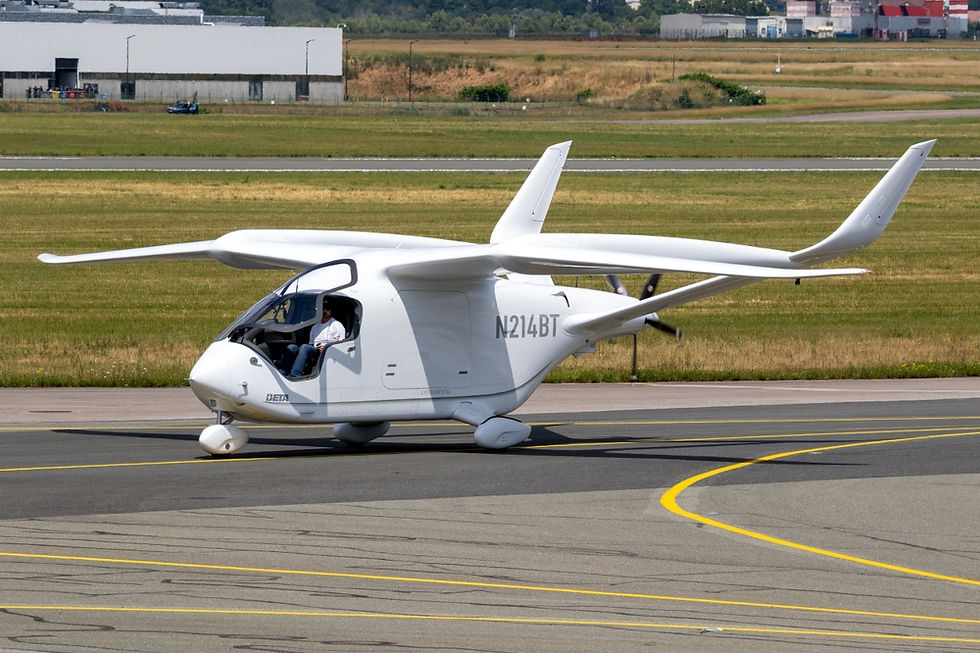
The flights officially launch the real-world testing phase of the electric Vertical Takeoff and Landing (eVTOL) Integration Pilot Program (eIPP). Managed jointly by the Department of Transportation (DOT) and the Federal Aviation Administration (FAA), the federal initiative spans eight distinct projects across 26 states to safely weave flying taxis and heavy cargo drones into the national airspace.
As the most active participant in the program, Vermont-based Beta is leading operations across seven of those designated state corridors.
A 315-Mile Medical Logistics Corridor
For its maiden federal mission, Beta deployed its ALIA aircraft on a multi-stop, cross-border journey connecting regional infrastructure nodes. The flight began at the Virginia Tech Montgomery Executive Airport in Blacksburg, Virginia, before making a scheduled stop at the Charlottesville-Albemarle Airport. From there, the aircraft continued north into Maryland, landing at Frederick Municipal Airport and concluding its 315-mile trek at Martin State Airport near Baltimore.
Tucked safely inside the aircraft's cargo bay was a genetically modified pig heart developed for research purposes by biotech firm United Therapeutics, one of Beta's prominent early investors. The trip successfully demonstrated how point-to-point electric aviation can drastically bypass highway congestion and traditional airport logistics to slash the transit timelines of time-sensitive medical payloads.
By utilizing its own rapidly expanding network of proprietary charging stations, which already make up the vast majority of active electric aircraft chargers at U.S. airports, Beta proved the regional viability of emission-free logistics.
The Long, Unforgiving Road to Passenger Flight
While the successful delivery provides a major boost to the aviation sector, the reliance on medical cargo rather than human passengers highlights the immense regulatory hurdles confronting the wider "flying car" industry. The timeline for true urban air-taxi services remains years away, defined by complex engineering milestones and fluctuating market dynamics:
The Flight Paths: Beta is pursuing a dual-track manufacturing strategy. Its conventional takeoff and landing (eCTOL) model is targeted for commercial certification by 2027, while the vertical-takeoff (eVTOL) passenger variant is tracking an official 2028 target.
The Capital Winter: The milestone arrives amidst a brutal market cool-off for advanced air mobility. Since staging an initial public offering (IPO) in November 2025, Beta's stock price has plummeted roughly 50 percent, moving in tandem with steep, one-third valuation declines hit by publicly traded rivals Joby Aviation and Archer Aviation this year.
Despite the punishing financial climate, the federal government is maintaining high-level political backing for the emerging technology. Transportation Secretary Sean Duffy recently became the first cabinet head to personally fly aboard a next-generation vertical-takeoff aircraft during an official visit to Beta's facilities.
By turning theoretical airspace blueprints into concrete regional deliveries, the pilot program ensures that while the dream of ordering an on-demand aerial Uber remains parked in the future, the physical aircraft built to handle those missions are already doing vital work.


